
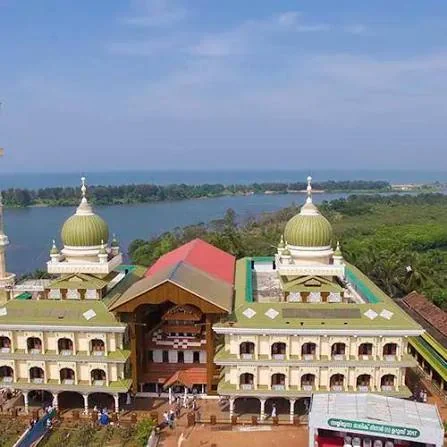
Malik Deenar Mosque, also known as Malik Ibn Dinar Juma Masjid, is a historic mosque in Thalangara, Kasaragod, North Kerala. Believed to have been founded by the Persian scholar and traveller Malik Ibn Dinar, it is regarded as one of the earliest mosques in the Malabar region. The mosque holds an important place in the history of Islam in Kerala and remains a significant religious destination for Muslims.
The present mosque reflects traditional Kerala architecture, with a tiled roof, spacious interiors, substantial wooden beams and intricately carved details. Its appearance reflects the region’s architectural traditions, while its religious significance connects visitors with Kasaragod’s long-standing Islamic heritage. The building has undergone several renovations over the centuries.
The mosque also has historical links to the arrival of Malik Ibn Dinar and the spread of Islam along the Malabar coast. An annual religious commemoration known as Uroos is associated with the mosque, attracting devotees from different places. Festival dates should be confirmed locally before planning a visit.
Located close to Kasaragod town and railway station, Malik Deenar Mosque can be included in a heritage-focused trip around northern Kerala. Travellers exploring historical places in Kasaragod can combine it with other local landmarks. Malabar Routes can help include the mosque in a customised Kasaragod sightseeing itinerary.
Malik Deenar Mosque is located in Thalangara, Kasaragod district, northern Kerala. It is approximately 2 km from Kasaragod town and around 1 km from Kasaragod Railway Station, making it accessible for visitors exploring the city.
The mosque is traditionally believed to have been founded by Malik Ibn Dinar, a Persian scholar and traveller associated with the early spread of Islam in Kerala. Historical accounts connect the mosque with the arrival of Islamic missionaries along the Malabar coast.
Malik Deenar Mosque is known for its religious significance, traditional Kerala-style architecture and place in the history of Islam in Kerala. It is considered one of the earliest mosques in the Malabar region and remains an important pilgrimage destination.
The mosque features traditional Kerala architectural elements, including tiled roofing, wooden beams, substantial pillars and carved details. The historic structure has been renovated over time, retaining elements that reflect the region’s architectural heritage.
Yes. The mosque is associated with Uroos, a religious commemoration connected to Malik Ibn Dinar’s legacy. Festival arrangements and dates can vary, so visitors should check with the mosque administration before travelling to attend an event.
The DTPC Kasaragod destination listing gives the mosque’s hours as 4:00 AM to 10:00 PM daily. As it is an active place of worship, access for sightseeing may depend on prayer times and local arrangements. Confirm current visitor guidance before your visit.
Malik Deenar Mosque can be reached by road from Kasaragod town. Kasaragod Railway Station is approximately 1 km away, while the local bus stand is around 2.4 km away according to DTPC Kasaragod. Local transport can help with the final part of the journey.
Yes. Malik Deenar Mosque can be included in a customised Kasaragod sightseeing itinerary with other suitable heritage and cultural attractions. Malabar Routes can help plan a trip around your travel dates, group size and preferred places to visit.